
Computing
Introducing the BBC micro:bit - BBC Make It Digital
Subscribe and 🔔 to OFFICIAL BBC YouTube 👉 https://bit.ly/2IXqEIn Stream original BBC programmes FIRST on BBC iPlayer 👉 https://bbc.in/2J18jYJ http://bbc.in/1...
St Giles Computing & Online Safety Curriculum
Long Term Planner
These tracks for each year group provide aroute of units to follow with a total of 36 teaching hours.
Each track includes a range of units offering full coverage of curriculum objectives as well as the three computing strands: Information Technology, Digital Literacy and Computer Science.
In most year groups there are also some additional units which can be taught in addition or as a replacement to those units in the suggested track, depending on the needs of your setting.
The units marked with an asterisk will be made live in early 2026.
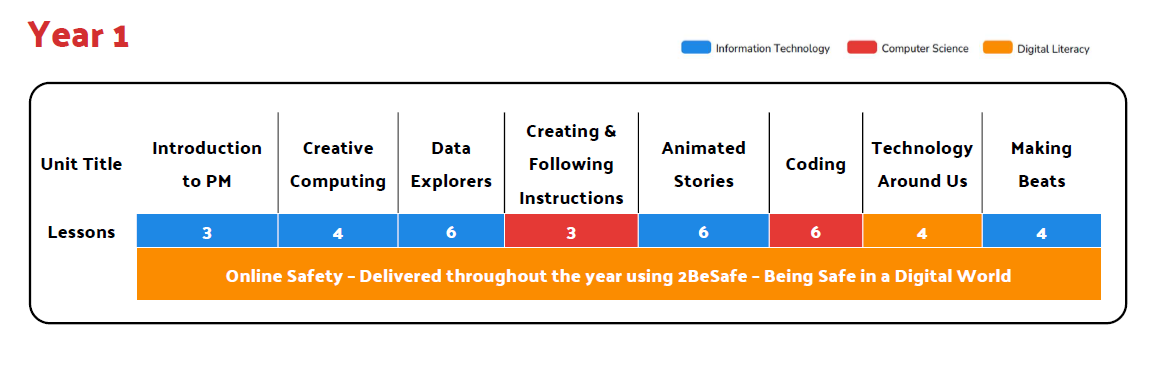
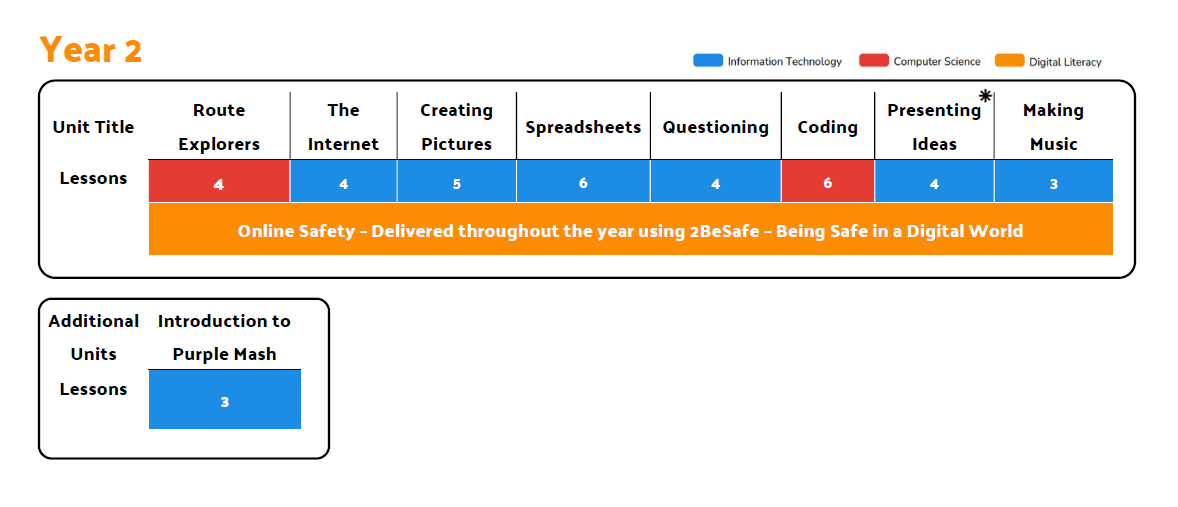
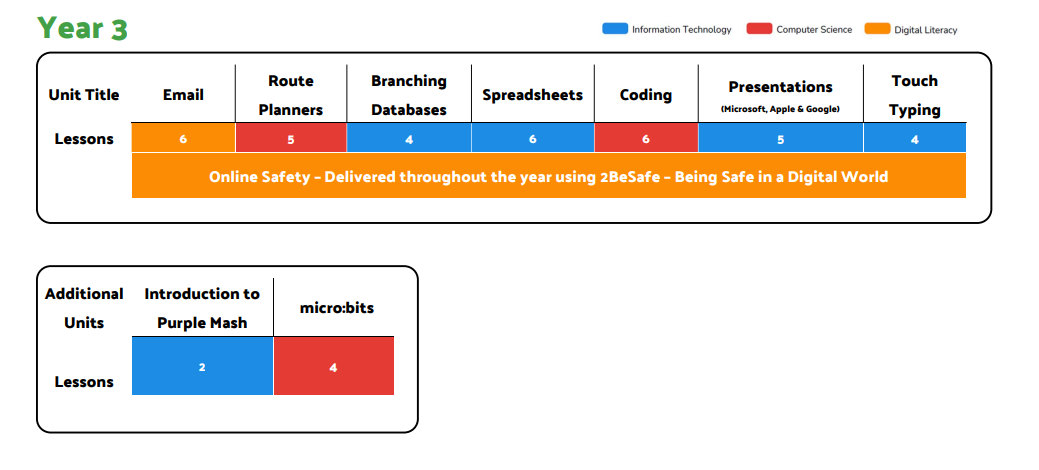
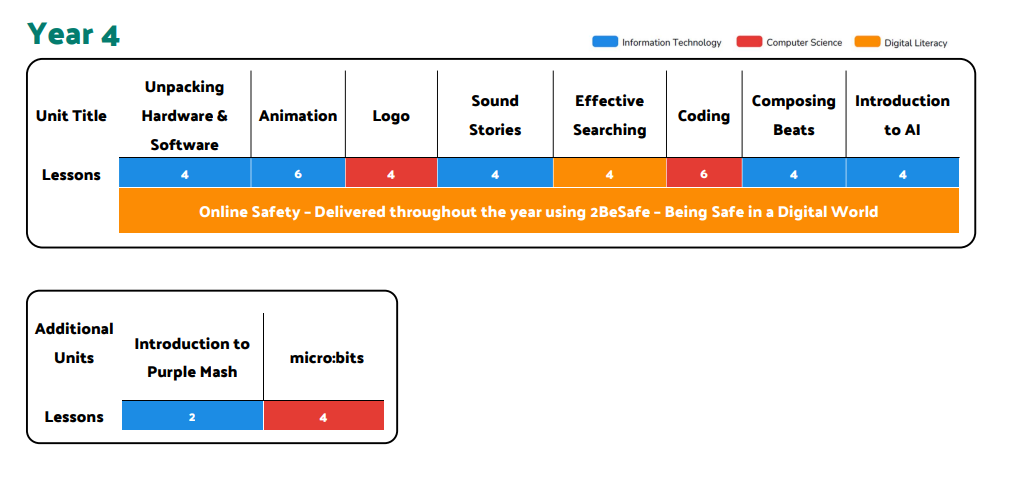
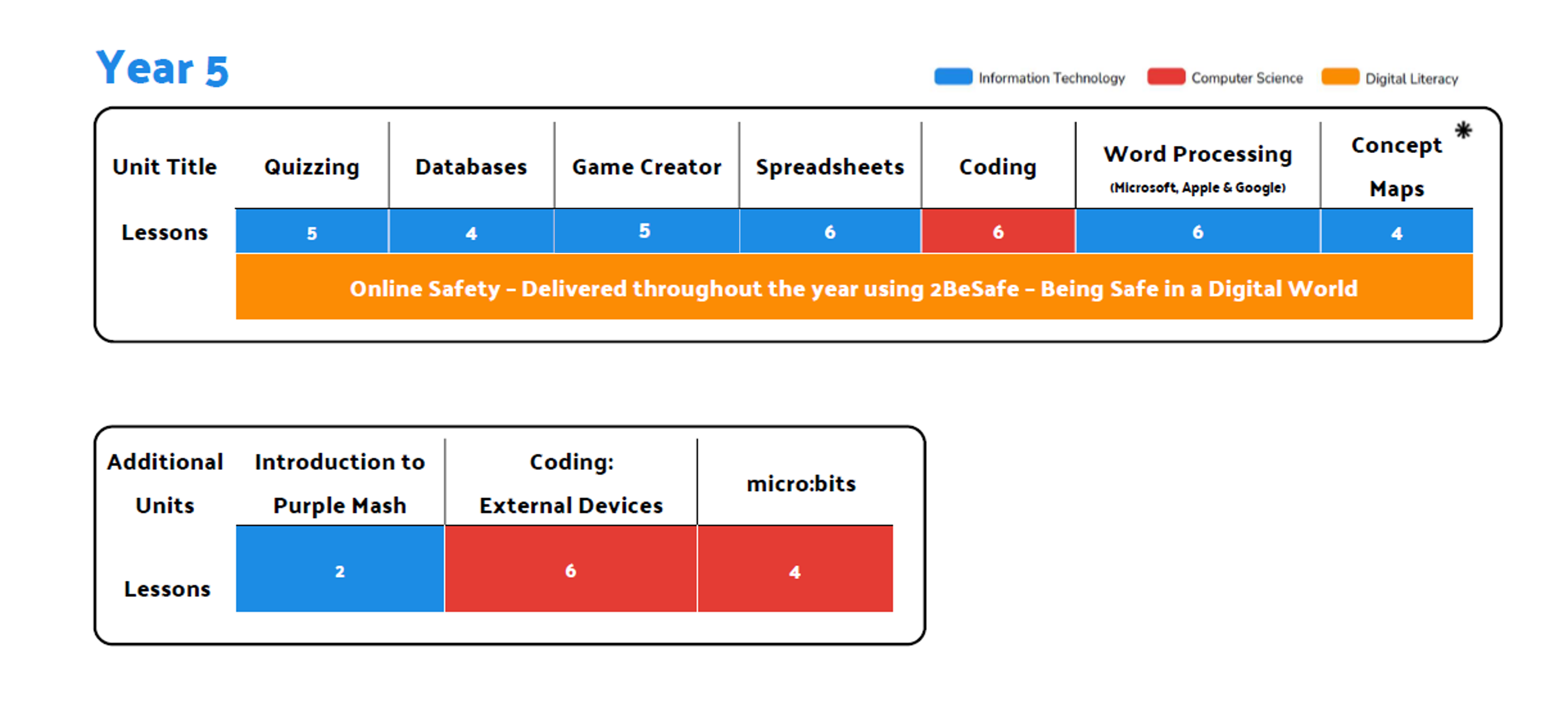
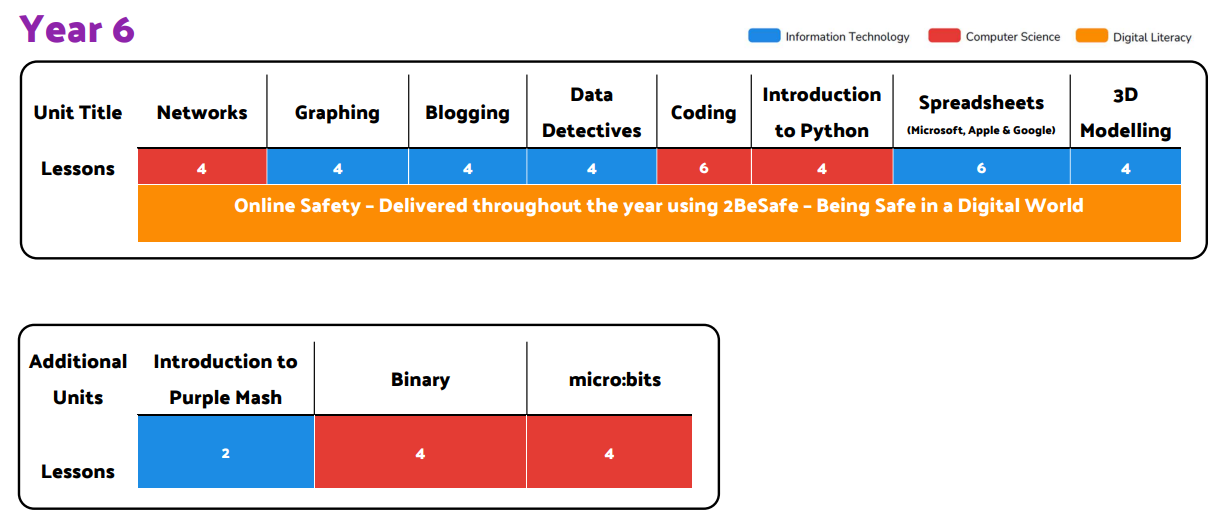
Adaptation and SENDWhere appropriate, guidance has been given on how to simplify tasks within lessons or challenge those who are ready for more stretching tasks. We identify SEND as a broad term which can include physical, sensory, cognitive, behaviour and learning access needs, of which some children with SEND needs may be functioning at above expected national levels. Online Safety:Online Safety is delivered over the course of the year using 2BeSafe - Being Safe in a Digital World. This is an Online Safety Scheme created by 2Simple. These sessions can be delivered outside of Computing lessons as part of PSHE and\or RSE lessons, or wherever timetable flexibility may allow.
|
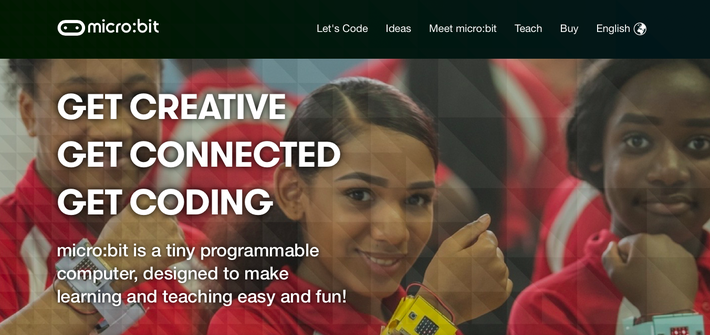
Coding- Why we chose to use Micro:bit to teach coding.
The Micro:bit Educational Foundation is a not-for-profit. It's in our Mission Statement to enable and inspire all children to participate in the digital world, with particular focus on girls and those from disadvantaged groups. We make micro:bit the easiest and most effective learning tool for digital skills and creativity.
We regularly commission academic research to check if we are achieving our mission. Results have been very positive.
Research Findings
The Foundation has built on initial research in the UK and is now working in 50 countries gathering more evidence through partnership. As new research from different sources becomes available it will be published on this page.
UK (2017) Western Balkans (2018) Denmark (2019) All research Testimonials
United Kingdom (published 2017)
Our first impact study was commissioned by the BBC after giving away up to one million BBC micro:bits for free to:
- Every year 7 student in England and Wales
- Every year 8 student in Northern Ireland
- Every S1 student in Scotland.
The study found that:
- 90% of students said the micro:bit showed them that anyone can code.
- 86% of students said the micro:bit made Computer Science more interesting.
- 70% more girls said they would choose Computing as a school subject after using the micro:bit.
- 85% of teachers agree it has made ICT/Computer Science more enjoyable for their students.
- Half of teachers who’ve used the micro:bit say they now feel more confident as a teacher, particularly those who say they’re not very confident in teaching Computing.
Read more in the BBC press release as well as King's College London's paper "Creating cool stuff". The paper by Sue Sentence focuses on the experience of 15 teachers and 54 pupils in English schools.
Western Balkans (published 2018)
The British Council commissioned research by IPSOS Strategic Marketing. The report shows the positive impact of the BBC micro:bit amongst students and teachers.
- 86% of teachers believe that micro:bit is useful in teaching a curriculum
- 90% of teachers believe that the micro:bit will inspire students about computing and coding outside the classroom.
- 93% of teachers thought the micro:bit would be inspiring for students in the classroom
- 100% of teachers thought it was a useful teaching tool
Read more in the study report.
Denmark (published 2019)
1,447 schools across Denmark (out of an approx. 1600) have been signed up for the ultra:bit project. The Teachers Resource Center (CFU) has provided BBC micro:bits to 64,287 students. The Center for Evaluation and Development of Science Education (NEUC) has, on behalf of the Danish Broadcasting Corporation (DR), evaluated the ultra:bit project in schools.
- 90% of teachers felt it was easier to code after working with BBC micro:bits
- 95% of teachers felt that students found it easier to code after working with BBC micro:bits
Read more in the NEUC report.
EYFS Scheme Of Work
Computing Scheme of Work
Online Safety CPD
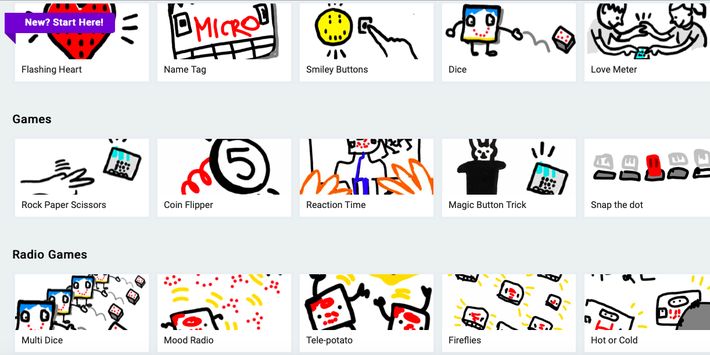
micro:bit Tutorial Series Part 1: Getting Started
Get started using the micro:bit with BBC's online MicroPython code editor. In this episode, we examine the micro:bit and program it to scroll the phrase "Hel...